INTRO
On Saturday, July 18, 2026, we (Crystal Mason & Jason Wyman) hosted a virtual salon as part of our People’s Symposium, called Who Needs the Gallery? Over the course of 90 minutes, we shared what we’re creating, revealed the Chambers of the Heart Virtual Gallery, and heard directly from artists about the impact the Nothing New Anti-Curatorial Framework (Guide & Toolkit coming Fall 2026!) had on them. After we ended the Zoom session, we sat down and recorded a reflective conversation, exploring themes, insights, and questions posed.
Conversation is our central value. Our praxis, which we write about here at Culture Tending Commons and which we consult on through Tree of Change, formed out of years-long conversation about dreaming and its power to help both of us face, name, and create change in our selves, each other, and our broader, intersecting communities. It continues evolving through a sustained practice of seeking nuance in understanding, digging for deeper collective meaning, and (re)articulating language in ways that are more culturally-specific to our client’s stakeholders (e.g. communities, members, audiences, staff, funders, investors, etc.).
Please read to the end. We pose a question, and we’d love to read your responses and comments.
LISTEN TO THE CONVERSATION
READ THE CONVERSATION
Jason Wyman
All right, so debriefing the thing today, and I’m going to do it this way real quick because that way we have better audio. All right, so debriefing. Debriefing. Who needs the gallery? What are your thoughts upon ending “Who needs the gallery? Crystal.
Crystal Mason
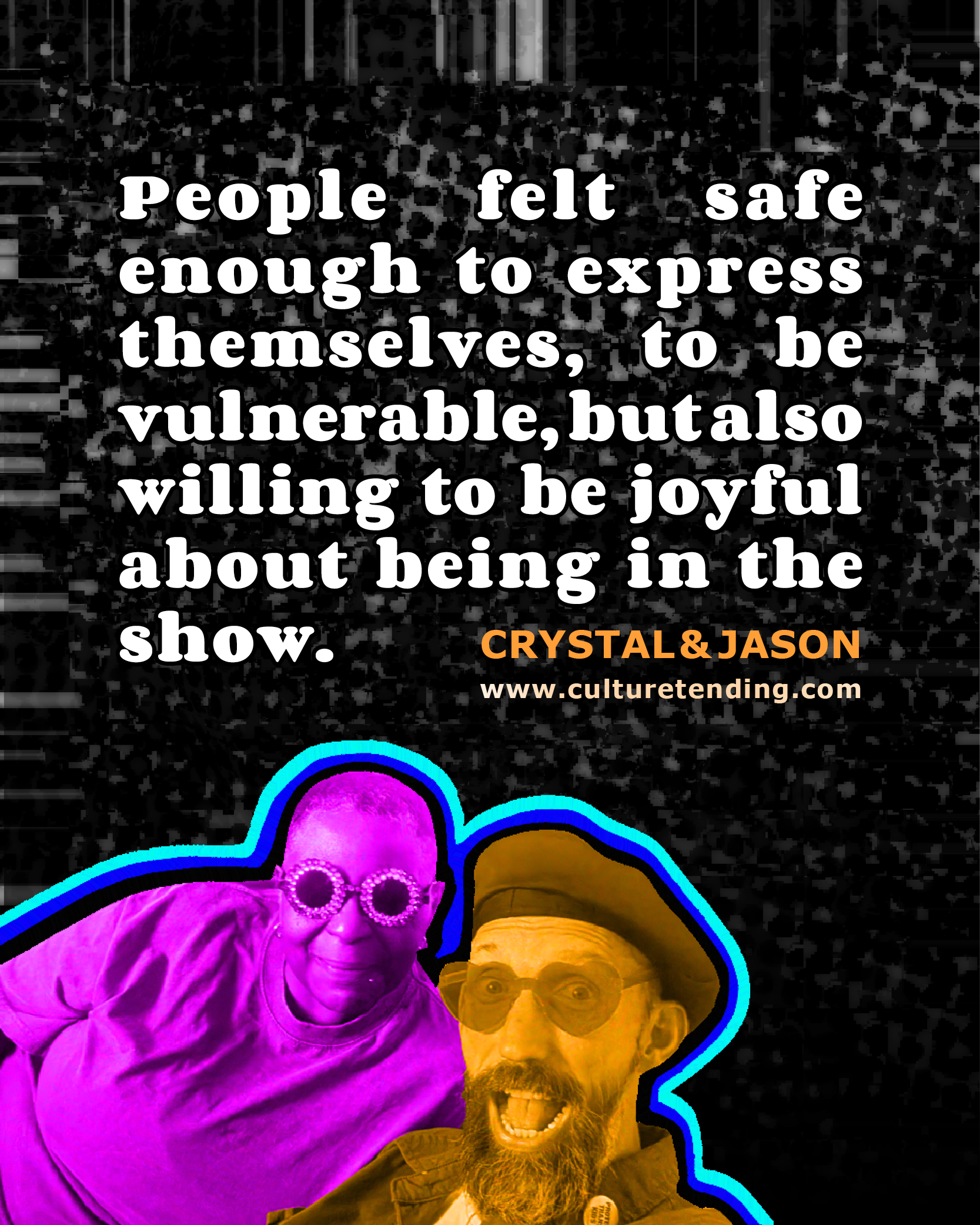
I think the presentation was good, and I think there was like a good balance between information giving and information getting from the people who showed up, and I think people really understand the concept and and what the good of it is, right? And what it does make possible. And I felt like that was a good conversation, and I think people felt safe enough to express themselves, to be vulnerable, but also willing to be joyful about being in the show and what it meant to them to be in the show, the people who were who are in the show, which I think is really important. But again, I think one of the things that happened that I think we wanted to accomplish is that other people saw and see the possibilities of doing something similar to this themselves, and I think that’s one of the important things about this: that it doesn’t just end here.
Jason Wyman
I am. first. I just want to appreciate the power that I don’t. I mean, I knew that what we had in this anti-curatorial framework was something that was perspective shifting. I still don’t think I fully grasped the power behind it and its ability to truly shift people’s own relationship to their own art making or identity as an artist.
And that came across loud and clear. Whether that be the form that you are making within is not considered art, literally not considered art. Illustration not art. Or whether that be subject matter not being considered art, like trans identities, queer identities, experiences, and expressions not being considered valid
Crystal Mason
or niche.
Jason Wyman
Yes, exactly. Yeah, and the way in which arranging things, like literally collecting and then arranging something, can be an act of witnessing and liberation.
Crystal Mason
Yeah, you know, I mean, I think though, I’m thinking, you know, the whole time I was thinking a bit back on queer art school [a virtual project by Crystal Mason, Jason Wyman / Queerly Complex, Tray Smith, and Midori with input from Juan Carlos Escobedo and blkcowrie facilitated in 2022.] And how the people who came for queer art school, who were artists and they sort of saw themselves as artists, but I think they all kind of came into it also kind of wondering still, and and some of them even feeling maybe a little bit like a failed artist, right?
And so I think it’s also about like how you treat people, right? Because I remember that even back when we were doing Lunacy [a performance and art space in the Red Brick Building co-founded by Crystal Mason and Miriam Kronberg,] right? There were other spaces around during that time, but again, the simplicity of having a show at Lunacy sort of match the simplicity of being in in the show here, and so what I’m seeing across all of that is is that when people feel really invited in, when you also come with some intentionality, when you’re planning something like this, and when you let people show up the way they need to show up, those are some of the things that help people feel like they are really artists among other artists. So not singular, but also not just one of the crowd, right? But as some as people having something unique to say, because in my mind that’s also kind of like what artistry and being an artist is: is having something unique to say, and that doesn’t mean you’re saying something that’s never ever been said before or seen before or thought of before, but it is about bringing your individual experiences to it that make it art and make it like interesting, right?
And I don’t know. I’m just rambling, but I think one of the amazing points is this thing that it’s an invitation, and it’s an invitation that most of us don’t get. And when you make that invitation and you make it accessible to to accept, and there’s not all these hurdles to jump over, you know, it’s like that baseball thing about building it and they’ll come.
Jason Wyman
Well, that I think is the thing that, I mean, one of my takeaways here is people. What what I heard is people felt included or like they belonged from the very beginning, which allowed them the capacity to submit, which then allowed them the opportunity to actually be in the show, and that in and of itself is this is going to be the the yeah what whatever that is administration
In all honesty that’s that is language and administration.
Crystal Mason
and structure right because again it makes the point that limiting is not necessarily gatekeeping. And I mean it can be, if you’re limiting in order to gatekeep. But if you’re limiting in order to open something up, you get different results, right? And also that the limitations can be complicated or they can be simple, and the limitations here are simple. You don’t have to be constantly asking yourself, “Is this for me? Is this for me?
Jason Wyman
That’s what I mean by. I think that is what I mean by administration here. Yeah, is that you know on the back end of this, the administrative function has been pared down to essential features that communicate requirements and do not communicate or give the impression of exclusion, actually.
And that so much, I think we when we think about things, I think that there is, you know, this is as someone that does arts administration, I feel like administration is the thing that people feel like gets in the way of participation. Yeah. Does that make like you know? And I think actually good administration actually facilitates participation. In all honesty, and we need to actually be challenging our own preconceived notions around around concepts of administration, because administration in and of itself is neither good nor bad. In all honesty, administration is what is actually necessary structurally in order to go from point A to point B to point C and make decisions.
Crystal Mason
That’s right. It’s not. It’s not really about the values. It is about making the values real.
Jason Wyman
Correct. Yes. Exactly. And so the administration of this from the very beginning is what helps create the framing device of the door, so that people can know whether or not to walk through it. That’s
Crystal Mason
right. Right. Yeah. Yeah. Yeah. So. So it’s funny because it brings to me that picture, like when I was a dog walker and always had these 50 million keys, and like you know sometimes standing in front of the door trying to key and trying to key, you know. And this like good administration takes that out of it.
You don’t have to stand there at the door wondering. You know, the decision really is: is this the door I want to walk through right now, right? Because I think about that. You know, like I submitted to that first show because it was so easy. The second show, I didn’t feel like it wasn’t like I didn’t feel like I wasn’t a part in any way, I was just like, I’m not ready, and that was my only decision. It wasn’t about do I fit in. Is this for me? My only decision was I’m not ready, right? And then like, so then this other show, yeah, that wasn’t for me. So again, I didn’t have to worry, and you know, is this for me? I just no, it’s not, and it’s okay because I’m in support of the people who it’s for, right? Yeah. And now this next show, again, my only decision is like, am I do I have something I want to submit or not?
You know, and and the reason that’s that easy because of the language, because of the outreach, and because of the low thresholds, you know.
Jason Wyman
Is there anything that you want to leave for the future?
Crystal Mason
I think it. worth it to have more conversations like this, and where we talk about this, but also where we talk about Queer Art School or Art Camp for Comrades [a virtual camp for artists designed by Jason Wyman in co-creation with Crystal Mason, Izza Anwar, Midori, Kafi-Ayana Allah, Fernando Vierra, Kapi’olani Lee, CieraJevae Gordon, and Aden Suchak.] And the things we’ve done that have made it accessible, but also brought people together in a space where where we support each other, and and again, part of what makes people feel like they’re artists in a space like the Nothing New or the Chamber of the heart is not just what you do, but what you see around what you’ve done. So it’s also like the opportunity to gather artists in a space and to have conversations.
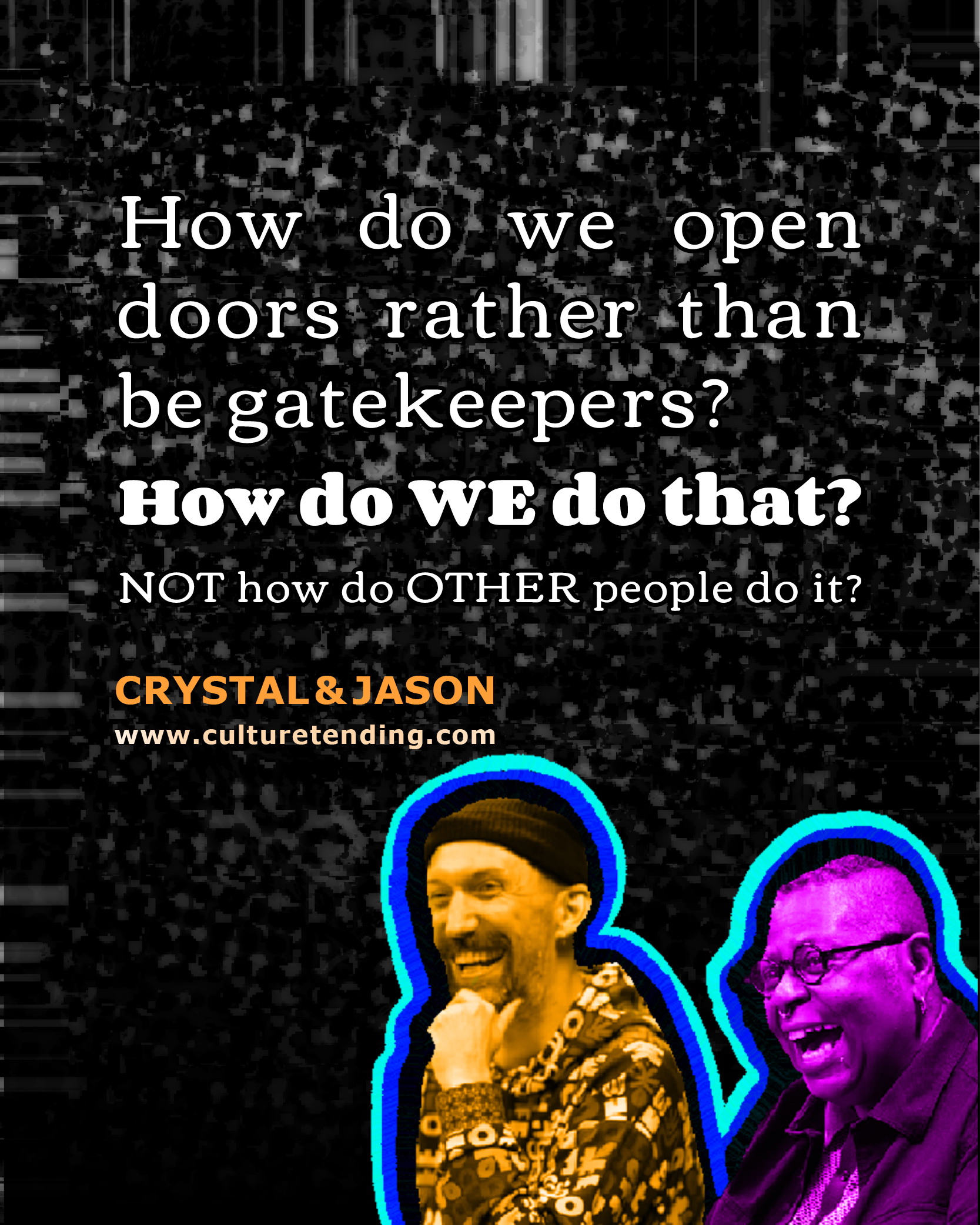
Basically, I think that’s the future, and the conversations being about how do we break down barriers, right? How do we open doors rather than be gatekeepers, and how do we do that? Not how do other people do it, you know?
Because again, that connotes permission and waiting for other people. When a big part of this and what this show and what this the anti curatorial thing creates is that idea that you don’t need permission and you don’t have to wait for other people.
Jason Wyman
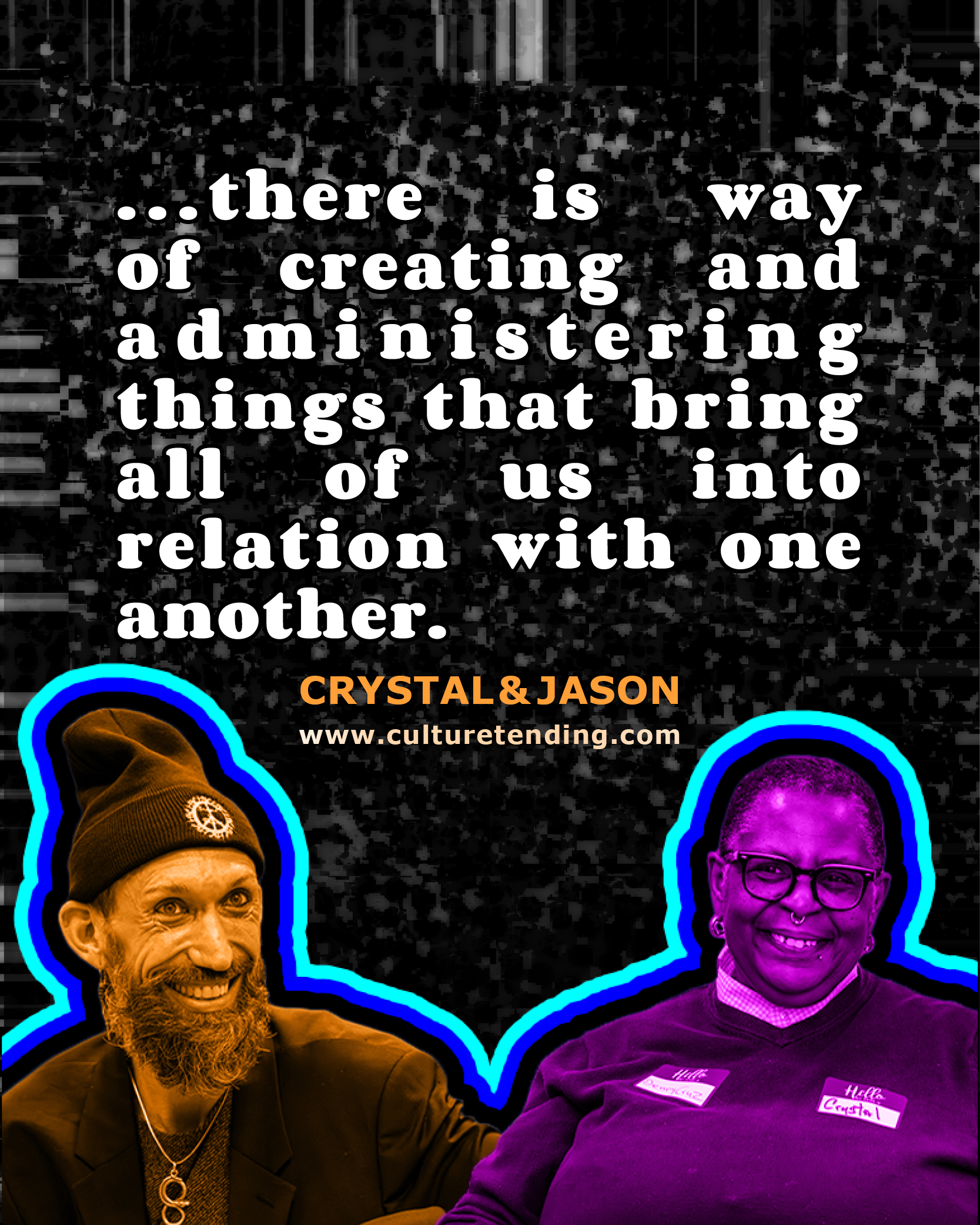
Yeah, I think the thing I want to leave or bring into the future is more people seeing themselves as actors in their own promulgation and the promulgation of other people and the promulgation of other people. I think one of the things that I’m sitting with at the conclusion of all of this is the framework is the liberation. In all honesty, and so how do we get these framing devices and these frameworks out more and more. These models that actually are working and producing real community and real senses of belonging across multiple identities. I mean, I was struck. I was struck. I’ve not met any of these artists personally yet. So for myself, this was like meeting some of the artists for the first time, and to hear from those artists how much they’ve already felt included before even joining this call today tells me everything I need to know about what I want for the future, which is more of this good kind of way of creating and administering things that bring all all of us into relation with one another, and that anyone can do it, in all honesty.
Crystal Mason
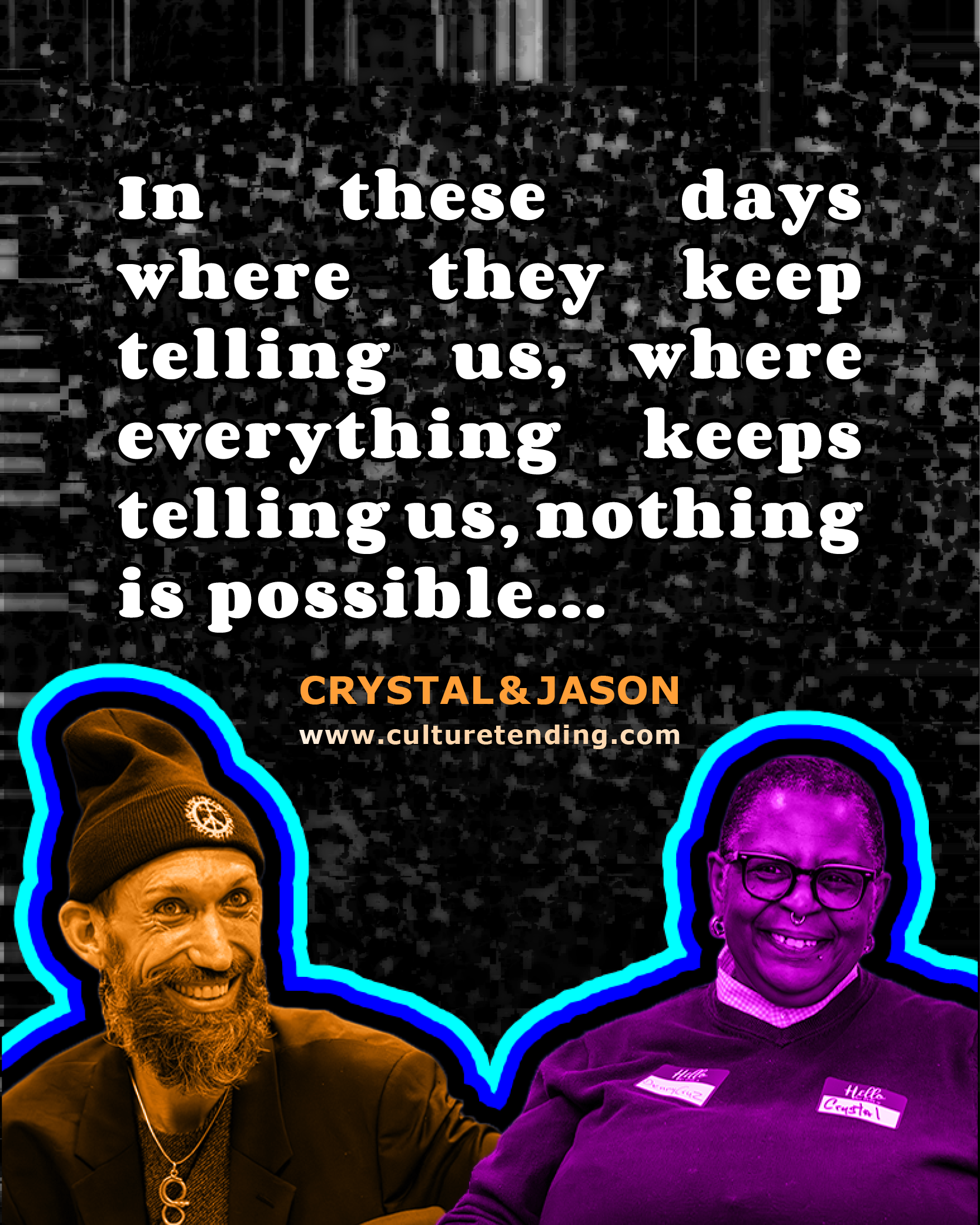
right? Yeah, yeah, yeah. Because I think that’s right. You know, because that’s like one of the main things about capitalism is again this other story that only certain people can do certain things. You know, and then even that, you better stay on your p’s and Q’s, because you’re gonna be replaced by the other handful of people who can do certain things in certain ways, right? And so this really breaks down also that barrier that that’s simply not true. That these are things that are open to anyone. That doesn’t mean that anyone can do it because that’s not true. We can’t all do everything, but what it does show is that if you have an idea, and if you have a few connections, you know, almost anything is possible. Yeah. In these days where they keep telling us, where everything keeps telling us is nothing’s possible, right?
Jason Wyman
As we conclude this, can you just share a little bit about who you are, your name, a little bit about who Crystal Mason happens to be, and where people can find out more about you?
Crystal Mason
Yeah. So yeah, my name is Crystal Mason. I’ve been here in the Bay Area for many years, off and on since 1989. I’ve been sort of in the art scenes again, sort of on the perimeter, but doing like actually a lot of things, and making a lot of things possible for a lot of people over the many years, and and for myself, right? And I think about the the times that I’ve had the the power to curate and to invite people in, and the fact is is that you know? That’s always been part of my work, and I’ve always had an eye to it of not being the arbiter of what’s good or not, to be quite honest. And that’s always been the way I looked at curation, because I feel like you know, do I have an eye for some things that are good? Yeah, but I’m not that person, and I don’t need to be because my goal is not necessarily to present the best art. It is to give people an opportunity to be artists, and if that’s my goal, I feel like I’ve done a good job, and that’s what I want to continue, is to creating those spaces where people feel like and will name themselves as being artists. I don’t forget what you asked me now. The
Jason Wyman
Last one is where can people find you? Or find out more about you?
Crystal Mason
Yeah, people can find me on Instagram with under @ham_job1, or you can find me on Facebook under Crystal Mason Consulting. I’m also on Threads. I don’t know what my name is there. I’m sorry. I think it’s @ham_job1. And also, you can find me at my website, which is CrystalMason.net You can find me at treeofchange.net. and you can also find some of my writing alone, but also together with Jason on culturetending.com.
Jason Wyman
And I’m Jason Wyman. I’m also known as Queerly Complex. I am an artist who practices the art of relating to oneself, each other, and the Cosmic Mysteries. I do that through a variety of different ways, including in partnership with Crystal Mason through our Tree of Change Praxis, which is a facilitation praxis that results in impact reports, strategic planning, design catalogs, popular education models, and a variety of other things. It also results in exhibitions and programming at 465 Collective, which is a physical lounge and gallery that is run by queer, trans, and sex worker artists and organizers and community folks, and through political organizing, both with Trans March and with the San Francisco People’s Budget Coalition, you can find out more about me at QueerlyComplex on all social media channels. Actually, except for Facebook, because I deleted Facebook because I hated it. So you can find it on Twitter, which I don’t use, BlueSky, YouTube, Instagram are all of the places that you can find at QueerlyComplex, and you can find more about me at queerlycomplex.com, along with treeofchange.net and culturetending.com.
Thank you so much for tuning in and listening, and feel free to check out both of our websites or all of our websites, and subscribe to all of the things that we do.
PARTICIPATE IN THE CONVERSATION
How do we open doors rather than be gatekeepers? How do WE do that? Not how do other people do it?